
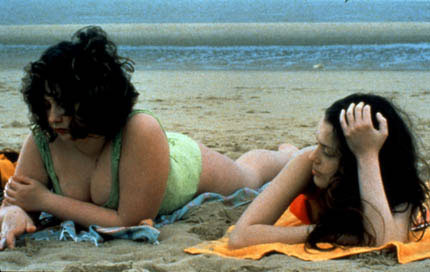
 Despite being basked in a golden Mediterranean sun, Catherine Breillat’s Fat Girl is a film devoid of warmth. A cold cynicism chills the film to a frigidity oddly appropriate for a story of two sisters frolicking on a summer vacation. You see, Breillat does not view these dapper, sun-drenched family outings as fun. Like so many other films, this summer vacation represents a sexual awakening, but Fat Girl shreds through the romanticism, leaving a harsh but indelible impression.
Elena, the elder and skinner of the too, is a budding beauty who thinks or has deceived herself into thinking that she’s found love in a caddish Italian college student. Her younger sister Anais, the titular fat girl, is given the unenviable role of sleeping in the same room as Elena loses her virginity, an act the film frames as tantamount to self rape. As for her own virginity, Anais says, “I want my first time to be with a boy I don’t love.”
Anais is a frightening character indeed, a prepubescent Frankenstein in the making. The shocking finale is almost a point of personal triumph for Anais—a sickening yet resonant thought.
Fat Girl, originally titled To My Sister in French, is a look at both the complicated relationship between sisters and the not so complicated relationship between men and women. Breillat actually tones down the sex in this film, but it shocks and provokes nonetheless. Breillat’s reputation as an international provocateur takes no hit with Fat Girl; it is a cold film, but a truly incendiary one.


No comments:
Post a Comment